Research by Hasse-Nima Golkar
According to published reports, on October 5, 2026, OpenAI announced that it would gradually introduce invisible text watermarking for eligible text generated by ChatGPT and Codex in the European Union. This technology, called textGrain, creates a statistical pattern in word selection that may enable certain texts to be identified by automated tools.
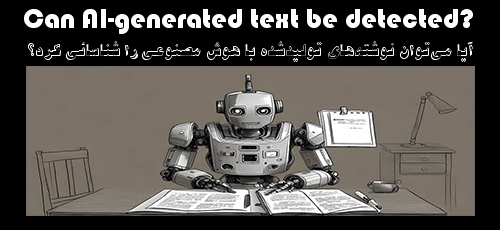
But the central question is this: Can ordinary readers identify articles and translations that have been produced entirely or partly with the help of artificial intelligence after they are published on websites and social media platforms?
The short answer is: sometimes, but not always — and not with complete certainty.
AI detectors analyze writing style, word choice and sentence structure to estimate the likelihood that a text was generated by artificial intelligence. However, they can also mistakenly label human-written text as AI-generated.
Another method, known as invisible watermarking, can introduce a technical pattern into text that specialized tools may be able to detect. Yet this method also has limitations, and the presence of a watermark does not necessarily mean that AI wrote the entire text.
Translations require particular care, too. Translating a human-written text with the help of AI is different from generating a new text from scratch. Moreover, the final text alone does not always reveal how much each — human or AI — contributed to its creation.
The bottom line: It is wrong to claim either that all AI-generated texts can be detected or that detecting them is impossible. Fair assessment requires credible technical evidence, not merely writing style or the result of a single detection tool.