Research by Hasse-Nima Golkar
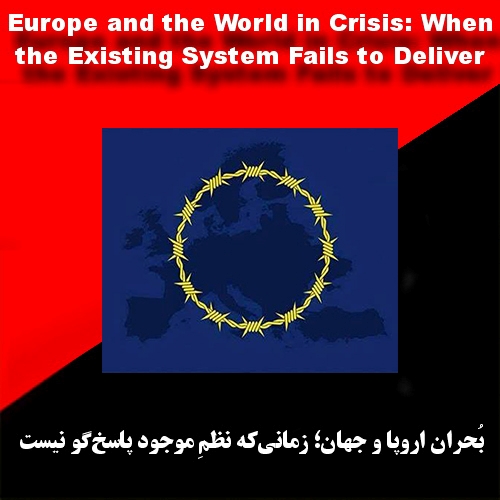
Why, despite enormous wealth, technological progress, and unprecedented productive capacity, do large sections of society continue to face economic insecurity, a housing crisis, and uncertainty about the future?
During the final weeks of October 2026, widespread protests involving young people, students, workers, and other social groups were reported in several European countries, including France, Germany, Italy, Spain, Belgium, Poland, Albania, and Portugal. In France, for example, repeated protests over conditions in schools and universities, the cost of living, and the economic situation continued to grow. In Germany, protesters called for greater investment in education, public services, environmental protection, and affordable housing. In Portugal, the housing crisis was also a major focus of protests.
In its report of 31 October 2026, the Associated Press referred to the French government’s estimate that around 320,000 people had taken part in protests that day. This followed two consecutive weeks of protests, for which the government had estimated participation at 550,000 and 410,000 people. These are official estimates. They should not be treated as confirmed figures or as proof that a single, unified movement exists across Europe.
Nevertheless, the timing of these protests, alongside economic and social crises, raises an important question: Are we witnessing separate expressions of discontent, or do these developments point to deeper contradictions in the economic and political organization of modern societies?
- The Crisis Is Not Just About a Lack of Money: It Is About How Wealth and Power Are Distributed
From an anarcho-syndicalist perspective, understanding the economic crisis requires looking beyond indicators such as GDP growth, inflation rates, or levels of investment. The more fundamental questions are: How is wealth produced? Who controls the means of production and economic resources? And how is the wealth created by collective labour distributed?
A society may be technologically advanced and have enormous productive capacity, yet still fail to meet the basic needs of a large part of its population.
This contradiction becomes clearer when housing, education, healthcare, and other basic human needs are determined primarily by people’s ability to pay and the pursuit of profit, rather than by social needs.
From this perspective, the problem is not simply poverty within a wealthy society. It is also about social and economic relationships in which decisions about resources and opportunities created through collective cooperation are unequally distributed among individuals and institutions.
Of course, markets, private ownership, and economic policies do not work in the same way in every country. Nor can every form of inequality be explained by a single cause. At its core, the anarcho-syndicalist critique focuses on the concentration of ownership and economic decision-making power, and on the consequences this has for freedom and social equality.
- What Do the Statistics Tell Us? Inequality and Economic Pressure Cannot Be Ignored
According to data published by Eurostat on 23 October 2026, the Gini coefficient for income inequality in the European Union stood at 29.2 in 2025, compared with 29.4 in 2024. This slight decrease indicates that overall income inequality across the EU fell marginally.
These figures do not, by themselves, support the claim that inequality has increased throughout Europe. However, they show that income distribution remains an important and measurable issue across member states, with significant differences between countries.
At the same time, Eurostat data show that the unemployment rate among people under 25 in the European Union reached 15.5% in September 2026, compared with 15.4% in September of the previous year. In the same month, approximately 3.022 million young people in the EU were unemployed.
These figures remind us that entering the labour market remains difficult for part of the younger generation. However, youth unemployment alone does not measure poverty or capture every aspect of economic insecurity.
The key point is that broad economic indicators cannot, on their own, explain people’s everyday experiences. Even when some indicators improve, housing costs, access to public services, and the quality of employment can remain major sources of discontent.
- Housing: A Human Need or a Tool for Capital Accumulation?
One of the clearest examples of the conflict between human needs and economic relations can be seen in the housing crisis.
For a young person who cannot afford suitable housing despite having an education and a job, economic independence becomes a distant dream. For a family that spends a large share of its income on rent or mortgage payments, even a wage increase may be swallowed up by essential expenses before it can lead to a real improvement in living standards.
In its analysis of young people’s housing conditions in the European Union, Eurostat reported that in 2025, housing costs accounted for more than 40% of disposable household income for 9.1% of young people. Among those aged 20 to 24, this figure reached 11.1%.
Housing conditions, of course, differ across European countries. These figures do not mean that all young people face the same housing crisis.
Nevertheless, the data raises a fundamental question: How can we speak of individual freedom and independence when meeting one of life’s most basic needs becomes a serious obstacle for part of society?
It is important, however, to distinguish housing as a social need from economic arrangements that tie access to housing to purchasing power and investment returns.
This perspective does not necessarily deny the role of markets or the differences between various models of ownership. Instead, it argues that access to decent housing, security of tenure, and people’s ability to participate in decisions affecting their living environments should have a central place in social policy.
- Why Are Young People Taking to the Streets?
Young people’s protests should not be dismissed as merely emotional reactions or the result of political groups stirring up trouble.
When education no longer guarantees stable employment, employment fails to provide economic independence, housing costs continue to rise, and the quality of public services falls short of social expectations, people’s trust in official promises of progress and prosperity can begin to erode.
A report published by The Guardian on 18 October 2026 discussed, among other things, youth protests in France, Spain, and Portugal and their links to school conditions, the cost of living, and access to housing.
However, these grievances do not necessarily lead to a single political position. One young protester may demand greater individual freedom and social justice, while another may turn towards nationalism or authoritarian politics.
Economic crisis, therefore, does not automatically produce a freer or more equal society. What matters is how social forces organizing themselves, what demands they put forward, and what alternatives emerge through their struggles.
- Democracy Without Economic Participation: How Far Does Freedom Extend?
One of the central criticisms made by anarcho-syndicalism is that democracy is often limited to the periodic election of political representatives.
Elections and political freedoms are essential. But are they enough to guarantee that people also have freedom and decision-making power in their workplaces, in economic life, and in decisions about shared resources?
Consider a worker who has a say in choosing the government but almost no control over major decisions in their own workplace. Or a tenant who has the right to vote but has no effective way to influence decisions when faced with rising rents and insecure housing.
Such situations show that political freedom can remain limited when it is not accompanied by greater participation and decision-making power in economic and social life.
The alternative proposed by the anarcho-syndicalist tradition is based on several principles:
- Independent, democratic trade unions organized from the grassroots in a horizontal, non-hierarchical manner, without a single central leadership.
- Direct worker participation in workplace decision-making.
- The development of self-managed councils and voluntary mutual aid.
- Solidarity among workers’ movements, tenants, students, unemployed people, and other social groups.
- Accountability of representatives, with members able to supervise and recall them promptly.
- The expansion of social ownership and collective control over resources and economic activities, with human needs and environmental sustainability given priority.
The purpose of these principles is not simply to replace one group of managers with another or to change the names of institutions. It is to expand collective decision-making power and reduce relations of domination in everyday life.
- Why Do Separate Protests Need Global Solidarity?
Economic and social crises do not stop at national borders. Investment, supply chains, energy markets, capital flows, and economic competition operate across national boundaries.
By contrast, workers’ movements and other social movements are often organized within national legal systems and borders, where they face different limitations.
From an anarcho-syndicalist perspective, this imbalance is extremely important. If economic relations operate globally, social solidarity cannot be limited to the borders of a single country.
Such solidarity does not mean ignoring national, historical, or cultural differences. Nor should we assume that all protests in Europe are part of one coordinated movement. Such a claim would require independent evidence.
However, workers and other social groups can learn from one another’s experiences, cooperate on issues such as wages, job security, housing, and public services, and build independent cross-border networks to defend their rights.
From this perspective, global solidarity is not merely an empty slogan. It is a practical effort to strengthen collective power in the face of economic relationships that extend beyond political borders.
- Is Every Revolt Necessarily Liberating?
The answer is no.
Social discontent can create opportunities for solidarity, self-organization, and demands for greater equality. But it can also lead to despair, xenophobia, authoritarianism, or the reproduction of the same relations of domination.
Even large numbers of people taking to the streets do not, by themselves, indicate that a lasting alternative is emerging.
The real question is whether social movements can move beyond temporary protests, build their own independent and democratic institutions, and genuinely distribute decision-making power among their participants.
Anarcho-syndicalism holds that social liberation cannot simply be left to the promises of leaders, governments, or political parties. Through their struggles, people must also develop their own capacity for independent organization, collective decision-making, and the management of their shared affairs.
In other words, the goal is not merely to protest against the existing system. It is to build social relationships in which freedom, equality, and social justice are reflected in the way the movement itself is organized.
Final Thoughts: As Long as Inequality Exists, the Grounds for Resistance Will Remain
Europe’s economic and political crisis cannot be reduced to the mistakes of a few governments, temporary price increases, or the dissatisfaction of younger generations alone. Alongside the specific factors affecting each country, this crisis raises deeper questions about the distribution of wealth, access to basic needs, the concentration of power, and the limits of democratic participation.
From an anarcho-syndicalist perspective, a lasting response to these questions cannot be limited to changing governments. It also requires a fundamental transformation of economic and social relationships, the strengthening of independent organizations, and the expansion of council-based self-organization and horizontal self-management, without rigid hierarchies or a single central leadership.
Nevertheless, not every protest is necessarily liberating, and continued resistance does not guarantee victory. The outcome depends on the quality of organization, the independence of social movements, the democratic nature of their internal relationships, and their ability to create practical alternatives.
As long as inequality, exploitation, and the denial of people’s decision-making power persist, the conditions for resistance will remain. But the vision guiding this resistance must go beyond replacing those who hold power. It must aim to expand freedom, equality, solidarity, mutual aid, and people’s collective control over their own lives.
We need a world in which the economy serves life rather than life serving the accumulation of wealth; in which decision-making flows from the bottom up instead of being imposed from the top down; and in which freedom and equality are not merely promises for the future, but living principles of social relationships.
This is the question the current crisis places before us: Are we going to seek only a place for ourselves within the existing system, or can we work together in solidarity to build a freer and more equal society?
As long as people continue to think about freedom, equality, and social justice, and struggle to achieve them, the possibility of building a more humane world will remain alive.
Selected Sources
- Official income inequality statistics: Eurostat, data for 2025.
- Official unemployment and youth unemployment statistics: Eurostat, data for September 2026.
- Young people’s housing conditions: Eurostat statistical reports on housing costs.
- Reports on protests and developments in France, Germany, and Portugal: Associated Press, 31 October 2026.
- Analysis of the social background to European protests: The Guardian, 18 October 2026.