Author: Narrator
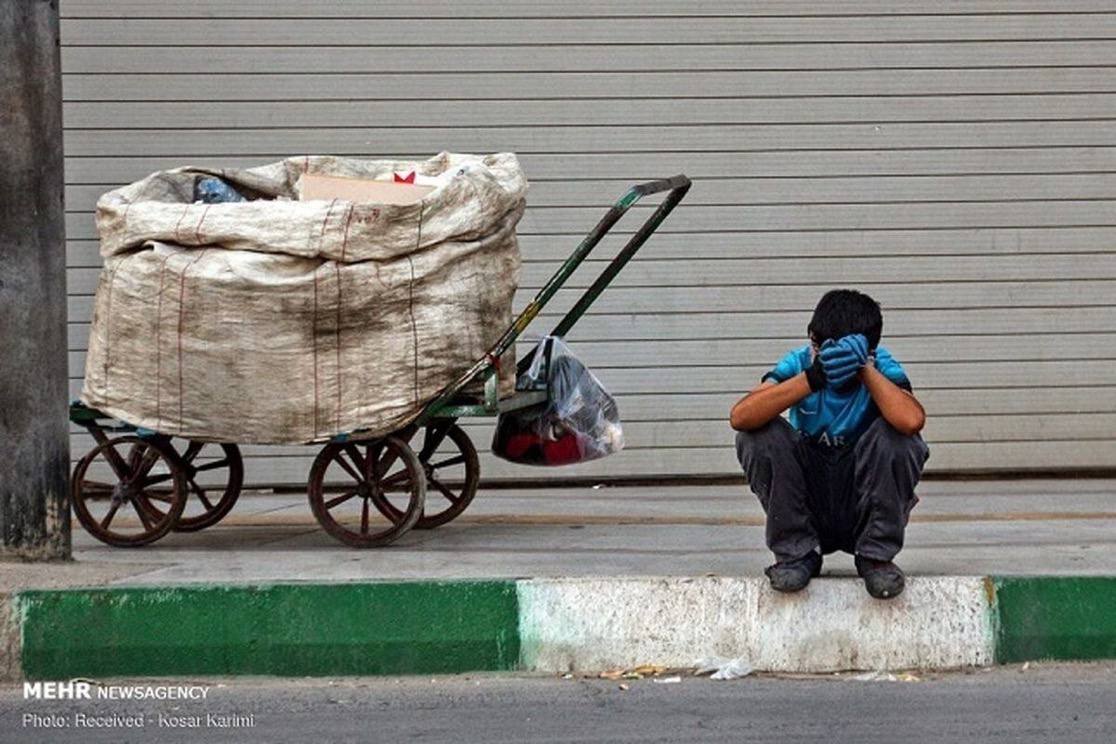
Do the people of Iran refrain from speaking more loudly about their suffering out of politeness and social convention, even as they are slowly dying from poverty and misery?
I am a working poor person. I am not currently homeless, but I am only one step away from homelessness.
I work in the service sector, in a job whose salary, until ten years ago, would have been enough for me to rent a decent home, buy a car, and travel.
I spent years working to acquire the skills required for this profession.
But this is what remains of all that effort, of working in this profession and participating in the Iranian labor market and society under the rule of the Islamic Republic:
In Iran, hunger and enslavement have become a daily reality. We live with hunger without hesitation or euphemism. I earn around 18 million tomans a month, and my salary has recently increased to 22 million tomans.
Between 6 and 8 million tomans of my salary goes toward a place to sleep that I share with six to eight other people: a women’s dormitory in Tehran.
The toilets and showers are perpetually filthy, exposing us to various illnesses. If we complain, we are told that we should pay more if we do not want to share a bathroom and toilet with 32 other people, facilities that are cleaned only once every two weeks.
My everyday life often feels like a punishment. Sometimes I think that actually being sent to prison might be a way out compared with living like this. I wish the gentlemen of the Islamic Republic would simply kill us or arrest us, because I no longer have any hope of living under these conditions.
The rest of my salary goes toward food and transportation. Having access to free metro rides remains an enormous temporary lifeline for me. Perhaps it is the only thing that still allows me to get to work.
What do I eat?
If we subtract 8 million tomans from 22 million, we are left with 14 million tomans.
I spend almost half of that on cleaning supplies, transportation, sanitary pads, and, if I am lucky, a secondhand piece of clothing, some hand or face cream, and internet access.
And I have to cover my daily food expenses with the remaining seven million tomans.
The only things I eat to feel almost full are as follows:
Potato chips for dinner.
Biscuits and tea or coffee for breakfast and lunch.
Instant noodles for dinner.
A piece of fruit and water for breakfast and lunch.
A single potato samosa for dinner. I am always wishing I could afford two, so that I might feel a little fuller. But being full, and being able to imagine eating more, remain far beyond my reach in my current financial circumstances.
For breakfast and lunch, I make do with a single ice cream.
With this diet, I am always hungry, constantly searching for affordable food, and imagining what might be waiting behind the doors of restaurants, hoping that one day I will finally be able to eat a decent meal there.
I have promised myself that I will visit a famous restaurant, and if I ever become a little wealthier, I will order fried chicken there.
That is my dream.
A dream so ordinary, so painfully basic, that these days I suffer and feel humiliated by how little it is.
Am I really just one person?
In the dormitory where I live, on the metro, among my colleagues, and among my friends, my story is repeated.
We work hard simply to stay alive. Widespread political and economic corruption, the Islamic Republic’s rent-seeking economy, and international sanctions have created devastating conditions for ordinary people.
A mass, silent killing is underway.
Yet Iranians often conceal their suffering from others living in similar circumstances, held back by shame, the desire to save face, and a culture of social politeness. We are experiencing widespread embarrassment, silence, and concealment.
We are not only suffering from hunger. We are also suffering from humiliation.
Consider this example.
A few days ago, it was my friend’s birthday. She is a young adult, like me, and has a job, but lives with her parents. She spends her entire salary on rent, while her family provides her with food.
On her birthday, she said, with a faint sense of hope, how wonderful it would be if her workplace organized a birthday celebration for her, since they had previously held one for their boss.
I told her that I did not want to upset her, but that it seemed unlikely they would do such a thing. I suggested that we think of something else instead.
Suddenly, my friend burst into tears.
I stared at her in shock, wondering whether she was really crying because she would not have a birthday cake or a celebration.
She told me that she already knew such a thing was highly unlikely.
But for a whole week, she had been giving herself hope that something better might happen on her birthday.
She said she had not even been able to afford to buy herself a cake or a gift. She was devastated by the fact that she had been forced to take refuge in such a childish fantasy just to make herself feel better, and that she felt humiliated by it.
She was right.
And now I, too, felt humiliated and sad beside her.
I could not buy my friend a gift or give her any reason to hope.
This is not the only situation in which I have felt this way.
When the person I love has no money, I am even more destitute than they are.
I feel ashamed of our inability to afford medication.
And I do not know what I am supposed to do with this overwhelming feeling that I am an unnecessary presence on this planet.
I see myself as the owner of a home whose house and bread have been stolen from her, while the thieves rule over her and her family at gunpoint. Other thieves are waiting to take even more from her, making an already unbearable situation even worse.
I am writing these words through tears. But I am not crying over a piece of bread.
I am grieving for my trampled dignity. I am grieving for my home. I am grieving for the man in the metro who was begging for enough money to buy a single cold tablet while struggling to breathe.
I am grieving because I cannot live with dignity and be treated with respect, as our culture has always demanded of us, and because I cannot see people as human beings rather than as mere sources of the resources necessary for survival.
I grieve for our truncated aspirations and our trampled dreams. I worry about the younger generations and the future that seems to have been predetermined for them.
And if saying these words serves any purpose, then I will say them:
Death to the plunderers and thieves who steal the people’s wealth.
Death to the criminals of the Islamic Republic and their supporters.
Death to those Western and Eastern officials who use the starvation of the Iranian people as a means of pursuing their own political interests.
Death to those who view human suffering selectively, according to their own political interests.
But since merely chanting slogans calling for the death of one group or another cannot, by itself, solve the problem, I will also say this:
Charity cannot solve the problems of Iranian society. This land possesses abundant resources and enormous potential, which would be sufficient for its inhabitants if it were free and allowed to flourish. Slogans alone are not enough, either.
We need our suffering, and the silent atrocity unfolding in Iran, to be seen and taken seriously.
We need to expose what is happening ourselves, as the people who inhabit this land, and we need the world to stand alongside the struggles taking place here.
International monitoring organizations must pay attention to Iran with the same seriousness with which they report the suffering of certain populations within a false and absurd moral binary.
The first step toward resisting a catastrophe is to expose it and refuse to look away.
Postscript: A recent poll conducted by the Anarchist Front indicates that approximately half of our respondents, most of whom are teenagers and young adults, earn less than 18 million tomans a month. Most of their income goes entirely toward food and housing expenses.