Reposted from November 8, 2025
Research by Hasse-Nima Golkar
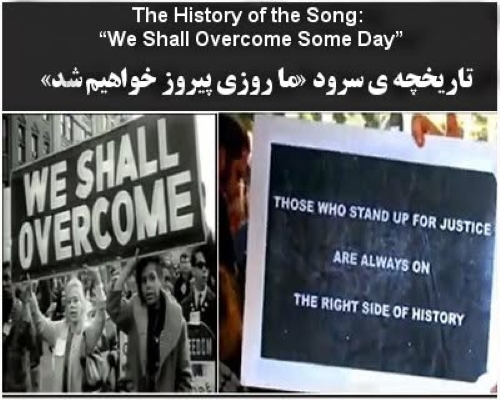
The original title of this protest song was published by Reverend Charles Tindley from Philadelphia, USA, in 1901. He was a clergyman of the African Methodist Episcopal Church and the composer of many other religious and hopeful hymns for African Americans.
In 1945, this song took on a political and protest tone for the first time. In the city of Charleston, South Carolina, the workers of the “American Tobacco Company,” who were earning only 45 cents in wages, went on strike and, in their protest lines, loudly sang: “We will overcome, and we will win our rights someday!”
“We will overcome, and we will win our rights someday!”
Later, in the 1950s and 1960s, this song became the main anthem of the American Civil Rights Movement; as a symbol of hope, resistance, perseverance, and peaceful struggle for freedom and racial equality.
Today, this hopeful cry must become the voice of billions of freedom-minded and equality-seeking people around the world against the unjust capitalist system and the exploitative, authoritarian, occupying, and genocidal governments of all sizes, and their diverse defenders and propagandists:
We shall overcome
We shall overcome
We shall overcome someday
Oh, deep in my heart
I do believe
We shall overcome someday
We’ll walk hand in hand
We’ll walk hand in hand
We’ll walk hand in hand someday
Oh, deep in my heart
We shall live in peace
We shall live in peace
We shall live in peace someday
Oh, deep in my heart
We shall all be free
We shall all be free
We shall all be free someday
Oh, deep in my heart
We are not afraid
We are not afraid
We are not afraid today
Oh, deep in my heart
We shall overcome
We shall overcome
We shall overcome someday
Oh, deep in my heart, I do believe!